

SEAM-EATER
(A Loom-and-D’Veen Convergence Tale — Annihilation Epoch / ~400 years after The Loom and the Maw*)*

Before the story
Welcome to SEAM-EATER, a weekly serialized crossover between my universe and Bradley Ramsey’s D’Veen—set during the Annihilation Epoch and centuries after the events that shaped my own tapestry-world.
This isn’t a “team-up” story. It’s a collision.
Azhal’Ruun’s cultists have found a tear in the woven fabric of reality and slipped into D’Veen to use a dying realm as fuel—enough power to bring their god fully into the world, and then return to strike at the Loom of Creation itself. Varrus Threadborne and the Thread Bearers follow them through the seam to stop that from happening.
You don’t need to read anything beforehand. Everything you need is on the page—just follow the thread.
Part I begins below.
Part I. THE THREAD THAT SHOULDN’T HUM
Four hundred years is long enough
for a religion to fossilize into etiquette.
Long enough for children
to trace sacred geometry into dust
without knowing whose teeth it once kept out.
Long enough for an old terror
to be renamed into something manageable,
something you can carve into a tavern table
and laugh at—
because laughter is a small, bright lie
and small, bright lies
are how people keep their hands steady
when the world’s stitching starts to show.
Varrus Threadborne did not laugh.
He stood where the Thread Bearers’ hall
met the edge of the world’s comprehension—
a place made not of stone,
not truly,
but of permission.
A threshold the Loom allowed them to imagine
so they would have somewhere
to put their reverence.
The air here always carried that sound:
not wind,
not choir,
but the low, patient hum
of something weaving whether or not you believed in it.
The Loom of Creation was not a symbol.
Not metaphor.
Not story.
It was—
and “is” was a weak word,
a child’s cup held under an ocean—
a loom of incomprehensible magnitude
whose woven tapestry held continents
like embroidered blasphemies.
The world was a textile.
Reality, a cloth under tension.
And lately—
Lately the tension had been singing wrong.
Not louder.
Not softer.
Sideways.
Varrus pressed two fingers to the inside of his wrist
where the Thread Mark lived under skin,
a faint burn that never healed right,
a vow written in nerve.
He listened.
The Loom’s hum was always there,
but now it carried a second tone—
a foreign resonance
like another instrument
trying to play along
using the wrong scale.
One of the acolytes behind him
shifted her weight.
A tiny sound.
A bootscrape.
Even that felt loud
in the way a chapel feels loud
right before an altar cracks.
“Head Thread,” she whispered.
He did not turn.
“Say it.”
“We found the candle-circle,” she said.
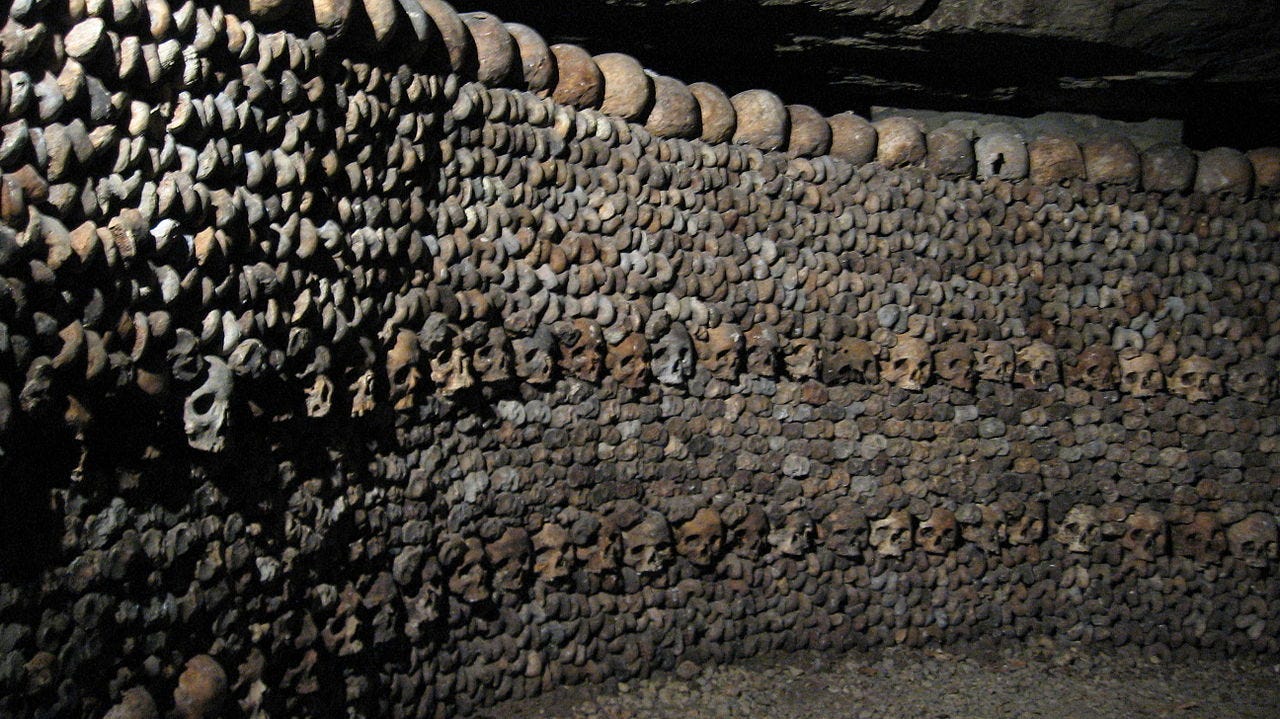
“In the lower catacombs.
Not ours.”
Varrus closed his eyes.
Not ours.
There were only two kinds of intrusions
the Thread Bearers ever named out loud:
Those that wanted to hide
from the Loom.
And those that wanted to hurt it.
He opened his eyes
and the world looked the same,
which meant nothing was the same.
“Show me,” he said.
The acolyte moved first.
No one liked walking ahead of Varrus
while the Loom was humming wrong.
They descended.
Stairs cut into old rock
that still remembered being part of a mountain
before the Loom wove it into a wall.
Torches burned with the clean, obedient flame
Thread Bearers preferred—
a light that did not flicker like fear.
But as they went deeper,
Varrus began to notice
that the darkness between the torches
was not behaving.
It pooled.
It clung.
It had weight
the way water has weight
right before it takes you.
By the seventh landing
the air began to taste faintly metallic,
like a copper coin kept too long under a tongue.
By the ninth
he could smell wax.
Not Thread Bearer wax—
their candles were beeswax, honey-thick,
smelling of summer and ritual.
This wax smelled like tallow.
Like rendered devotion.
They reached the catacomb door.
The acolyte held the latch
as though it might bite.
Varrus put his palm against the wood.
The Loom’s hum flinched.
Not recoiled—
the Loom did not fear.
But it understood.
Like a spine understanding a knife.
He pushed.
The door opened.
And the candle-circle waited inside
like a pupil.
It had been drawn in black salt
and whatever else had once been alive.
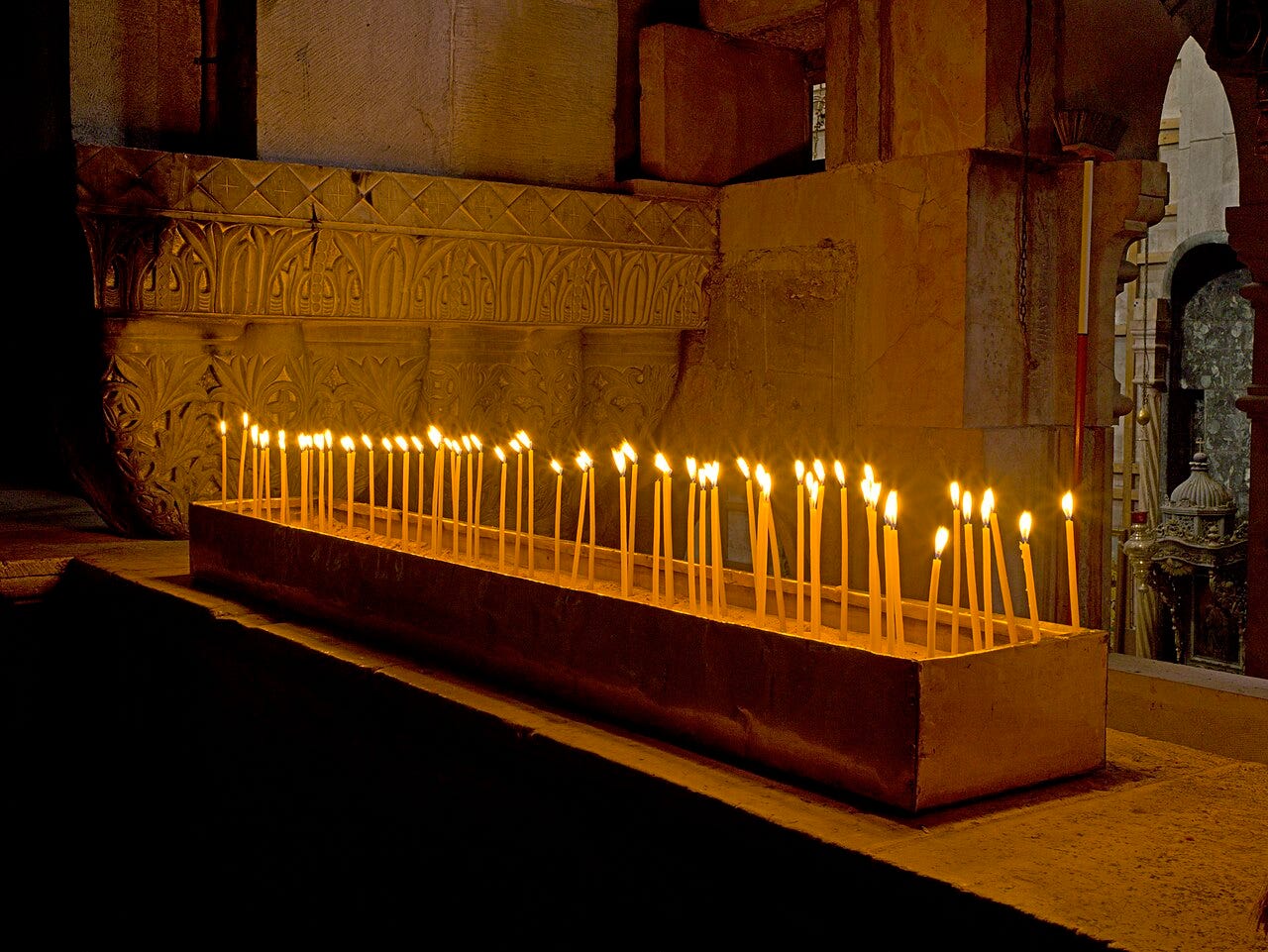
A ring of candles stood around it—
tallow,
each one guttering with a thick, greasy flame
that made the air feel used.
Between the candles,
sigils had been carved into the stone.
Not the clean spirals of the Loom.
Not the ribbed circles of Thread Bearer script.
These were angular.
Hungry.
Pure malice filled every single inch,
of every single line.
They looked like letters
someone invented
by tracing the shape a throat makes
when it tries to swallow a scream.
At the center of the circle
lay a scrap of cloth.
A strip of tapestry.
Varrus’s breath stopped.
That fabric—
that weave—
he knew it like he knew his own pulse.
It was not from any banner.
Not from any robe.
It was world-fabric.
A cut taken from the Loom’s own tapestry.
A theft that should have been impossible.
And yet it lay there
like a peeled scab.
The acolyte made a sound
so small it was almost prayer.
Varrus stepped into the circle.
The air inside it felt different.
Thinner.
As though reality had been shaved down
and now your skin could feel the draft.
He knelt.
The cloth was warm.
Not from candle heat.
Warm the way meat is warm.
Warm the way a mouth is warm.
He picked it up carefully,
holding it by the edges
as if it might try to stitch itself back into him.
The threads on the cut edge
were frayed.
But not randomly.
They had been worried.
Chewed.
Pulled apart by something patient enough
to do it strand by strand
without losing its appetite.
Varrus looked at the sigils again.
And knew.
Not by translation—
these marks didn’t belong to his language.
He knew by feel.
By the way the Loom’s hum
tightened in his bones.
Azhal’Ruun.
Not the god itself—
not here—
but the shadow of its name.
The scent of malice
that always preceded the bite.
Varrus stood.
His voice did not rise.
It did not need to.
“We have a tear,” he said.
The acolyte’s throat worked.
“A tear… in the tapestry?”
“Yes.”
“Can we mend it?”
Varrus looked down at the strip of world-fabric
and felt something ancient
press its forehead against the inside of reality
like a beast testing a door.
“We don’t mend this,” he said.
“We cauterize it.”
He turned to the others.
“All Thread Bearers,” he said,
“seal the catacombs.
Burn the tallow.
Scrape the salt.
Do not breathe the smoke.”
One of them flinched.
“Head Thread… where did they go?”
Varrus stared at the circle.
At the center,
the air shimmered faintly,
not like heat
but like a seam being worried open
by invisible fingers.
“They went where the Loom is thinner,” he said.
“Where a new cloth can be ruined
without waking an old god too fast.”
He lifted the strip of tapestry.
“And we follow,” he said,
because that was what Thread Bearers did.
They held the thread.
Even when it cut.
II. D’VEEN, UNDER A SHATTERED MOON
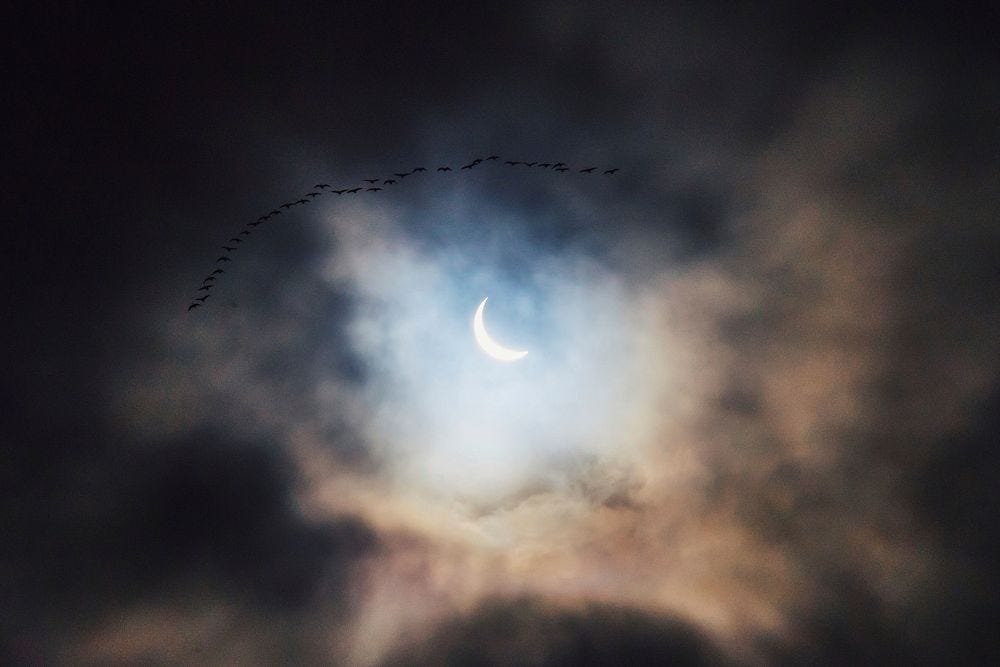
In another universe,
a shattered moon watched a man walk
as if the sky had been struck with a hammer
and never quite healed.
Finton Merrybrook paused beneath that fractured light
and tried to make his lungs behave.
He was, by most definitions, ancient.
He was also, by most definitions,
tired of being ancient.
The road under his boots
had once been a road.
Now it was a suggestion
etched into mud and ash.
The trees on either side
were too quiet.
Not the quiet of peace.
The quiet of a crowd
holding its breath
because someone just walked in
with a knife they aren’t trying to hide.
Finton adjusted the strap of his satchel
and muttered, almost fondly,
as though speaking to the world
might remind it to stay sane.
“Dear me,” he said,
“if I survive this epoch
I’m taking up a hobby
that doesn’t involve… doom.”
The word “doom”
felt like a laughable exaggeration
until the wind shifted
and brought him the smell of rot.
Not ordinary decay.
Not leaf-mold.
This smell had intention.
It smelled like something learning
how to ruin you
in the most efficient order.
Finton’s fingers brushed the edge
of a folded contract in his pouch,
old parchment, old promises.
The Order of the Pawn had been an idea
for a long time.
An idea meant to become a lever
against whatever the realm insisted
was inevitable.
Inevitable was a word
lazy gods used
to keep mortals from trying.
He had built taverns for strangers
to meet their fates in.
He had gathered warriors
who still believed
the universe could be argued with.
He had watched whole ages
glitter themselves into arrogance
and then bleed.
Now—
now the realm was in its Annihilation Epoch,
and hubris had finally come due.
The cost was not paid all at once.
It was paid in increments:
a village that stopped answering,
a forest that began to whisper
names into travelers’ mouths
until they forgot what language they spoke,
a child born with moss in her lungs,
a river that tasted faintly of funeral.
Finton walked.
He did not hurry.
Hurrying made you feel in control,
and control was the first thing
D’veen punished.
Ahead, through the trees,
a cottage waited.
Once, it might have looked picturesque.
Now it looked like something
the world had tried to forget
and failed.
Vines crawled over its walls
like veins.
The door hung slightly open
as if the house had exhaled
and never inhaled again.
Finton stopped at the threshold.
The air here was colder
than it had any right to be.
He stepped inside.
The smell hit him.
Must.
Rotten food.
Old paint.
And beneath it all,
a faint, sharp note
like metal on tongue.
Someone had been making art in here.
Bowls of paint littered surfaces.
Half-finished canvases leaned against walls,
their colors dulled
as though the house had been drinking them.
Finton moved carefully.
His boots avoided a broken jar
without him deciding to.
That was the first sign.
His body was making decisions for him.
Because the room was making decisions for the room.
He reached the bedroom doorway.
The bedroom beyond
was too neat.
One canvas sat on an easel beside the bed.
It depicted a city swallowed by mist
under a violet sky full of distant stars.
Finton felt a pang.
He recognized that skyline
the way you recognize a scar
you didn’t know you had
until someone touches it.
In front of the painting
a silhouette shimmered
like a mirage
trying to remember how to be a person.
Finton’s throat tightened.
“There you are,” he said softly.
The silhouette did not answer in words.
It answered in the way the air trembled
as if the world itself
was trying not to blink.
Finton approached.
The figure’s edges wavered.
It was as if someone had cut a person
out of reality
and forgot to smooth the line.
“You’ve been touched,” Finton murmured.
That word—touched—
was polite.
What he meant was:
Something had reached through the veil
and left fingerprints on her soul.
The silhouette turned its head.
Where a face should have been
there was only shimmer.
But the voice that came out
was exhausted and human.
“It’s happening sooner,” it said.
Finton exhaled.
“Of course it is.”
The silhouette lifted a hand,
and for an instant
Finton saw something in its palm:
a mark.
Not D’veen script.
Not any rune he knew.
A spiral turning inward on itself
with ribs.
A circle that looked like a mouth
learning how to be a symbol.
Finton’s heart did something old and ugly.
He had seen that shape before
in the oldest Chrona.
In stories that weren’t supposed to be stories.
In warnings
disguised as myths
so people could sleep.
“What did you touch?” he asked.
“I didn’t,” the silhouette said.
“That’s the problem.”
The air in the room shifted.
Not forward.
Not backward.
Sideways.
Finton’s skin prickled.
He looked at the painting again.
The violet sky.
The mist.
The stars.
One of the stars blinked.
Not like a star.
Like an eye
remembering it could.
Finton stepped back.
The silhouette’s voice cracked.
“Something is looking through.”
Finton swallowed.
Outside, the shattered moon hung
like a broken plate.
Inside, the painting’s horizon
seemed to deepen,
as though the canvas was becoming
not an image
but an opening.
Finton reached into his satchel
and drew out a small stone—
smooth, round,
ordinary enough to be overlooked.
He held it up.
The stone warmed slightly.
A listening tool.
A way to hear the thread of a place
without sticking your hand in the seam.
The stone’s surface vibrated.
And beneath that vibration
Finton felt a second hum.
Not D’veen.
Foreign.
Ancient.
A resonance that did not belong
to this cloth.
Something had found D’veen.
Something from outside the realm
had pressed its mouth to the veil
and started to whisper.
Finton Merrybrook stared at the painting
and felt, for the first time in a long time,
a kind of fear
he couldn’t sing his way out of.
“Alright,” he whispered.
“Then we’re not just dealing with the Rot.”
The silhouette’s voice was barely there.
“What are we dealing with?”
Finton listened to the wrong hum.
The sideways note
that made the air feel thin.
And he spoke carefully,
because names were doors.
“We’re dealing with something
that knows how to tear cloth,” he said,
“and wants to see what’s on the other side.”
III. THE CULTISTS LEARN TO BREATHE NEW AIR
Back in the Loom’s tapestry-world,
far from D’veen,
the tear widened.
Azhal’Ruun’s cultists moved like a sickness
that had learned to pray.
They did not call themselves cultists.
They called themselves the True Bite.
They carried icons
carved from bone
that was not from any beast known to the tapestry.
They wore red cloth
because red represented—
malice and destruction.
Their leader—
a woman with a throat scar
shaped like a smile—
stepped into the shimmer
and did not hesitate.
Hesitation was how you got eaten.
She carried with her
a spool of thread.
Not Loom-thread.
Not sacred fiber.
This thread was black
and wet-looking,
and it seemed to drink light
the way a mouth drinks water.
She had stolen it
from a reliquary that screamed
when opened.
She had heard the scream
and called it music.
Behind her,
the others gathered:
men with hands too steady,
women with eyes too empty,
children who had been taught
that cruelty was a form of worship.
They formed a circle
and began to chant.
Not words.
Not exactly.
More like the shape of words.
The rhythm of a jaw working.
The cadence of something chewing
in the dark.
The tear in the world-fabric responded.
It widened
with a slow, intimate sound
like cloth ripping under careful hands.
On the far side
a different air waited.
D’veen-air.
Air under a shattered moon.
Air already full of its own apocalypse.
The cult leader smiled.
“Do you smell it?” she whispered.
“Rot,” someone behind her said,
reverent.
“Yes,” she said.
“And fear.”
A younger cultist—barely a man—
swallowed.
“Will he… fit?” he asked.
He meant Azhal’Ruun.
He meant the god of malice and destruction
who could not yet fully enter their world
because the Loom held the thread tight.
The leader lifted the black spool.
“He doesn’t need to fit,” she said.
“He needs to feed.”
She stepped closer to the tear.
“This realm already bleeds,” she murmured.
“It’s already paying the cost of hubris.”
Her fingers traced the seam.
“Now it will learn
what it feels like
when the cost has teeth.”
She pushed her hand through.
For a moment
her skin shimmered,
as if reality tried to refuse her.
Then—
acceptance.
The tear opened wider.
The cultists began to move.
One by one
they stepped through the ripped fabric of creation
and into a realm
that was not woven by their god.
A realm they intended
to turn into a mouth.
Behind them,
the tear quivered,
as if considering whether to close.
The leader looked back
and smiled again.
“Oh,” she whispered to the seam,
as if speaking to an animal.
“Don’t worry.”
“We’ll come back.”
“And when we do,” she promised,
“we’ll bring enough ruin
to make the Loom
finally snap.”
IV. THE THREAD BEARERS FOLLOW

Varrus arrived at the tear
with six Thread Bearers
and a silence that did not belong to the catacombs.
They wore their Order’s marks:
thread-stitched cuffs,
sigils burned into leather,
and around their wrists,
thin silver bands
etched with the Loom’s spiral.
Each band was a reminder:
You are not the weaver.
You are the held thread.
You are allowed to exist
because the Loom keeps tension
and tension keeps shape.
The tear hung in the air
like a wound in a painting.
Varrus stood before it
and felt the Loom’s hum
tighten behind his ribs
like a hand gripping his heart
to keep it from stepping out of his chest.
One of the Thread Bearers—older, scarred—
spoke without looking away from the seam.
“If we cross,” he said,
“do we remain… under the Loom?”
Varrus’s jaw flexed.
He did not like that question.
Not because it was wrong.
Because it was honest.
The Loom’s tapestry held their world.
If they stepped out of that tapestry—
what held them then?
Varrus reached into his cloak
and drew out a spool of bright thread
so pale it almost looked like light.
Loom-thread.
Sacred.
A gift granted only to those
who had already lost something to the cosmos
and still chose to serve it.
He tied one end around his wrist.
Then he tied the other end
to a carved post embedded in the stone
—an anchor marked with the Loom’s spiral.
“Hold the thread,” he said.
The others did the same.
Six wrists bound.
Six lines of light
leading back to home.
Varrus stepped closer to the tear.
The air on the far side smelled wrong.
Not like hell.
Not like rot.
Like different physics.
Like a new book
whose pages hadn’t been cut yet.
He spoke without raising his voice.
“Azhal’Ruun’s people are ahead of us,” he said.
“They’ve found another realm.”
One of the Bearers whispered,
“Why would the Loom allow this?”
Varrus stared at the seam.
“The Loom allows many things,” he said.
“Hunger exists.
Maws exist.
Even gods exist.”
He touched the edge of the tear
with two fingers.
The seam was cold.
Not cold in the sense of temperature.
But cold like meaning.
A cold that made your thoughts
come out slower.
“A Weaver chooses what she knots,” he murmured,
remembering old doctrine, old truth.
“She doesn’t choose what unravels
when she pulls.”
He looked back at the six.
“We don’t go to conquer,” he said.
“We don’t go to preach.”
“We go to keep the thread from becoming a noose.”
Then he stepped through.
For a heartbeat
the world became a thin, screaming line.
He felt his body try to become a question.
He felt his name
rattle.
He felt the Loom-thread around his wrist
pull taut.
And then—
he was standing under a shattered moon
in a realm called D’veen
during an epoch that already knew
the end could be scheduled.
Behind him,
the others followed, one by one,
their faces pale in foreign light.
Varrus inhaled.
The air tasted faintly of rot.
And beneath that—
beneath the rot—
another taste.
Old malice.
Recent prayer.
Azhal’Ruun’s cultists
had already learned
how to breathe here.
Varrus Threadborne looked up at the broken sky
and felt, far away through the thread,
the Loom’s hum.
Not gone.
But strained.
As if someone, somewhere,
had started pulling.
“Find them,” he said.
And the Thread Bearers moved.
To be continued. . .
This was siiiick. I'm excited to read more!
The convergence of the two worlds in this first chapter is masterfully done. Loved the perspective shifts, and I can already seen how you've become more comfortable in D'veen since your last visit.
FInton's voice and mannerisms for example are spot-on here. The imagery of the shattered moon, and the comments on hubris and the realm's history are all excellent.
It truly feels like these two worlds were destined to meet, regardless of the cost. I look forward to more!